
Learning by Doing on Our Own
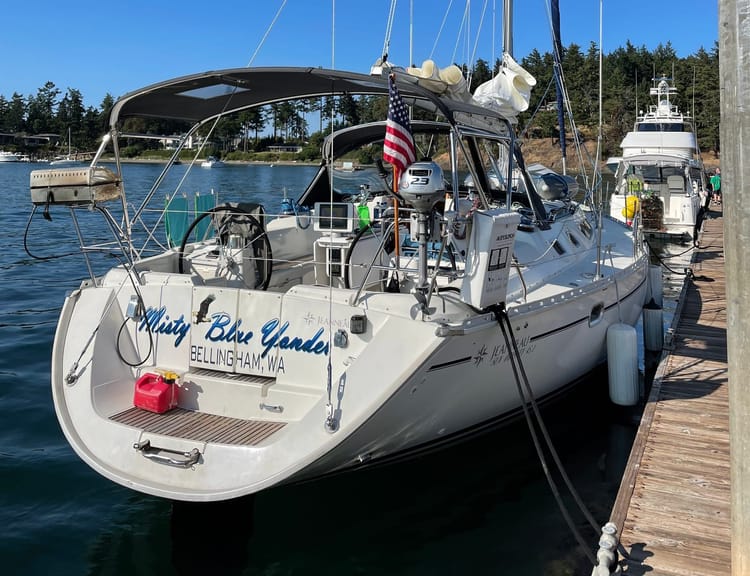
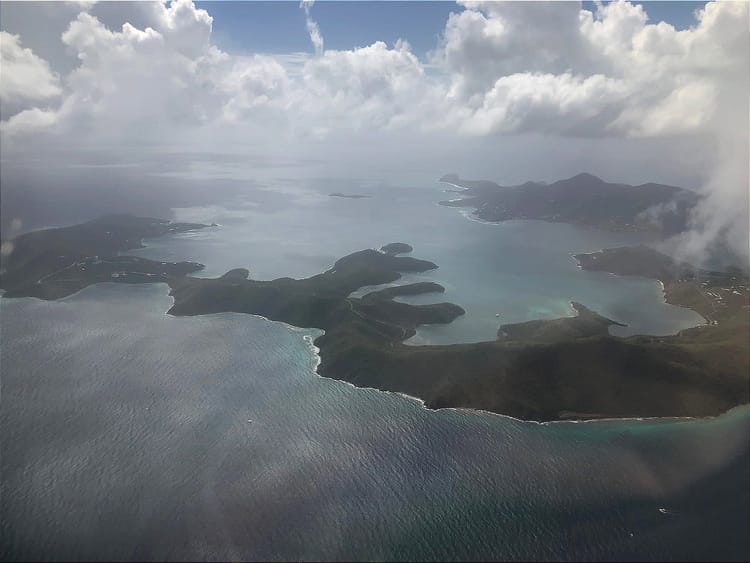
For us, learning experientially beats theoretical learning hands down, and the Miss-U, a sailboat we rented from Seabattical during mid-May to mid-July of 2021, was the perfect teacher. She was a retired charter boat in the British Virgin Islands (BVI) once beloved, now a little beleaguered.
Her sails were baggy, there was a sour smell below decks, and many things aboard didn’t function well. Nothing was right, yet everything was perfect. We learned more from her than we ever could have anticipated.
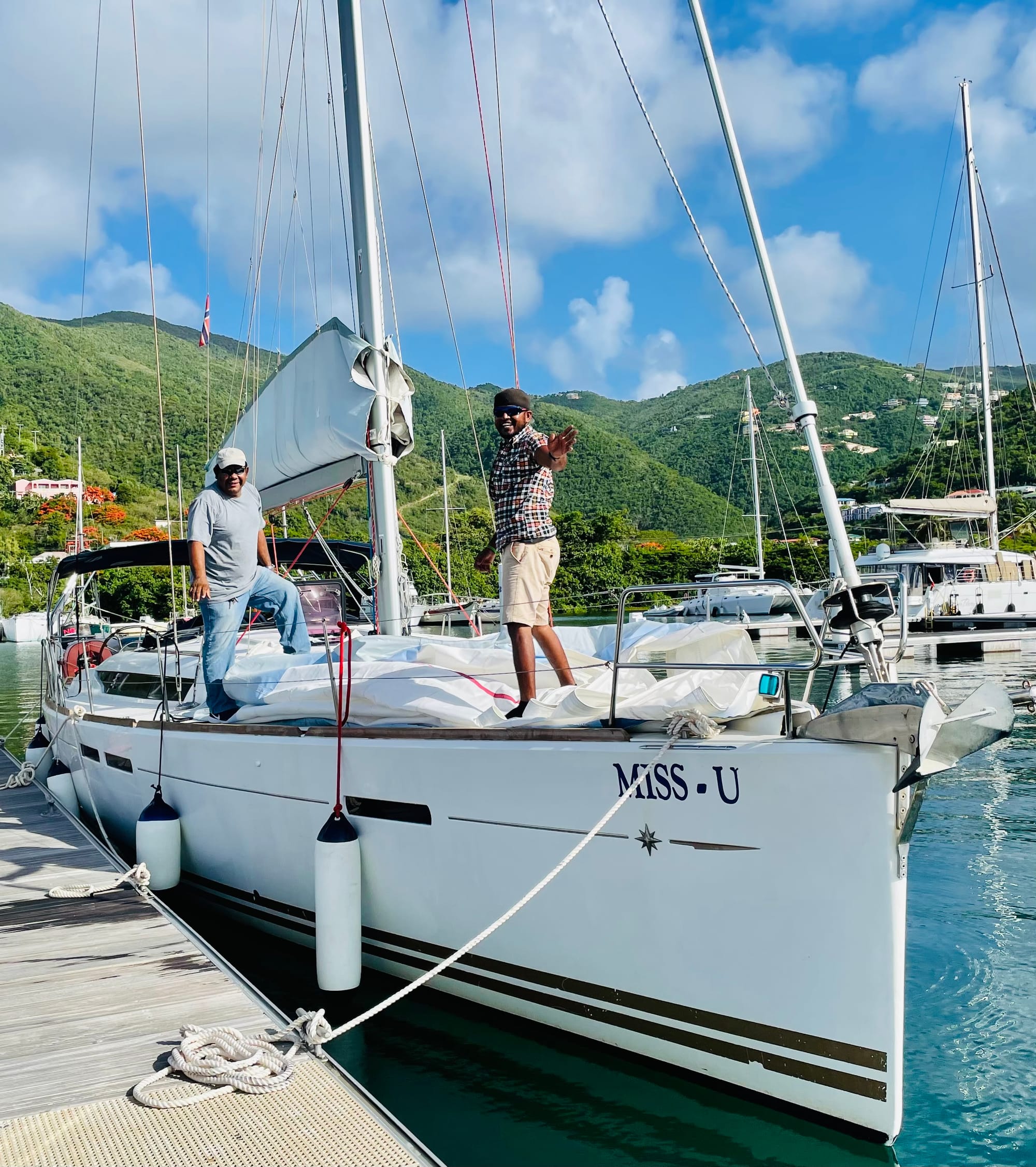
In the beginning, we were more than a little dismayed about her condition. Midway through our two month rental period we were laughing and calling this adventure “The Art of the Work Around.” And by the end we agreed she was the best thing that could have ever happened to us. We got a taste of what long-term cruising would be like and the first hints of what it might take.
We sailed for two months, and the waters in the BVI were blessedly quiet due to the constraints of COVID-19. Few boats were sailing then and, yes, we had to endure the tiresome, cheeky comments about her name from the few sailors we saw - We Miss You! Where Were You? or See You Again! But, there were no crowds in some of the most beautiful spots in BVI paradise. And, as always, we were met with great kindness from many people. Especially Robert Fredericks, the resourceful boat manager we worked with from Seabattical.
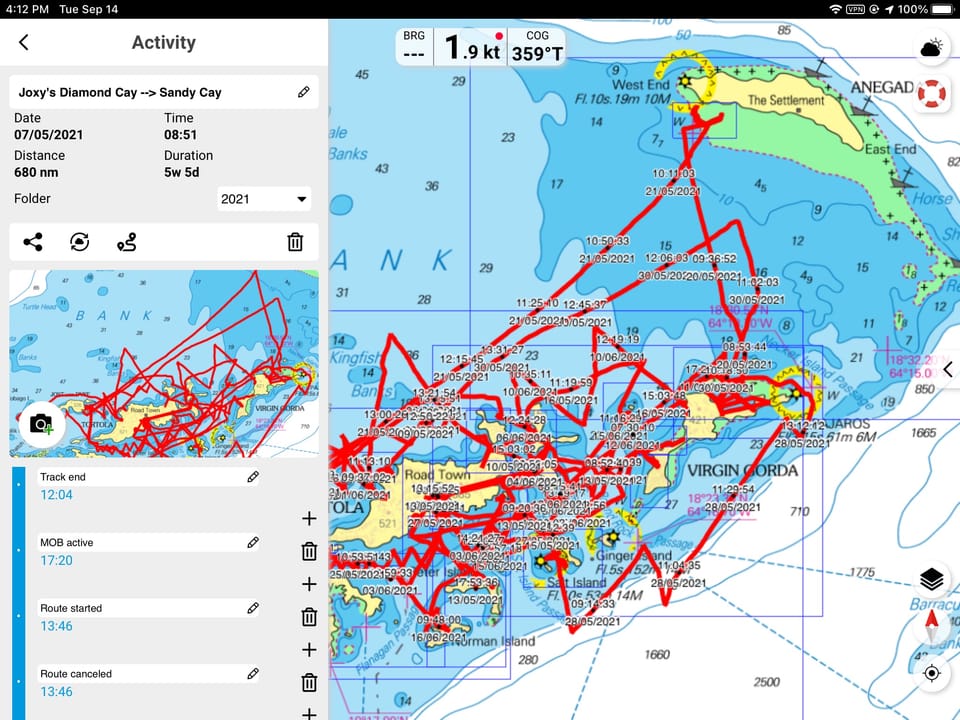
We intended to cruise to islands in the Caribbean beyond the BVI and eventually graduate to short overnight passages. However, again thanks to COVID-19, international borders were opening and closing unpredictably. Yes, we could sail the boat out of the BVI, but we couldn’t re-enter the country and fulfill our contractual obligation to return the boat to Seabattical. So, we stayed within the BVI, sailing 1,000 nautical miles through their protected waters, passing over the same tracks again and again.
We invented challenges for ourselves: tacking every 90 seconds, sailing with only the mainsail or only the genoa, sailing only downwind or upwind, sailing on and off anchors and moorings, maneuvering without the motor in tight spots, and more. We practiced so that communication, timing, and teamwork became second nature. We studied and developed new skills in navigation, reefing, boat systems, maintenance, dinghy handling, storm prep (thanks to a passing Category 1 hurricane), and provisioning.
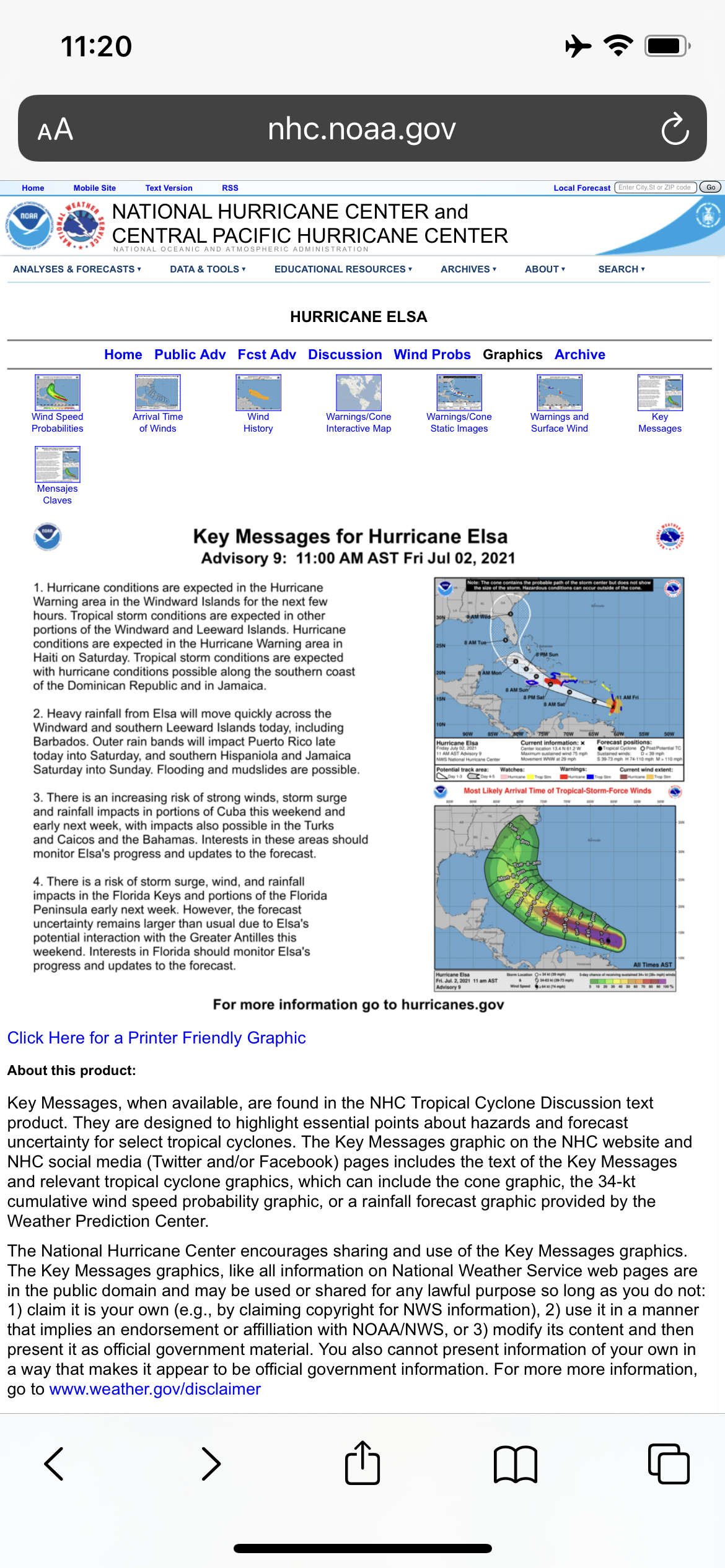
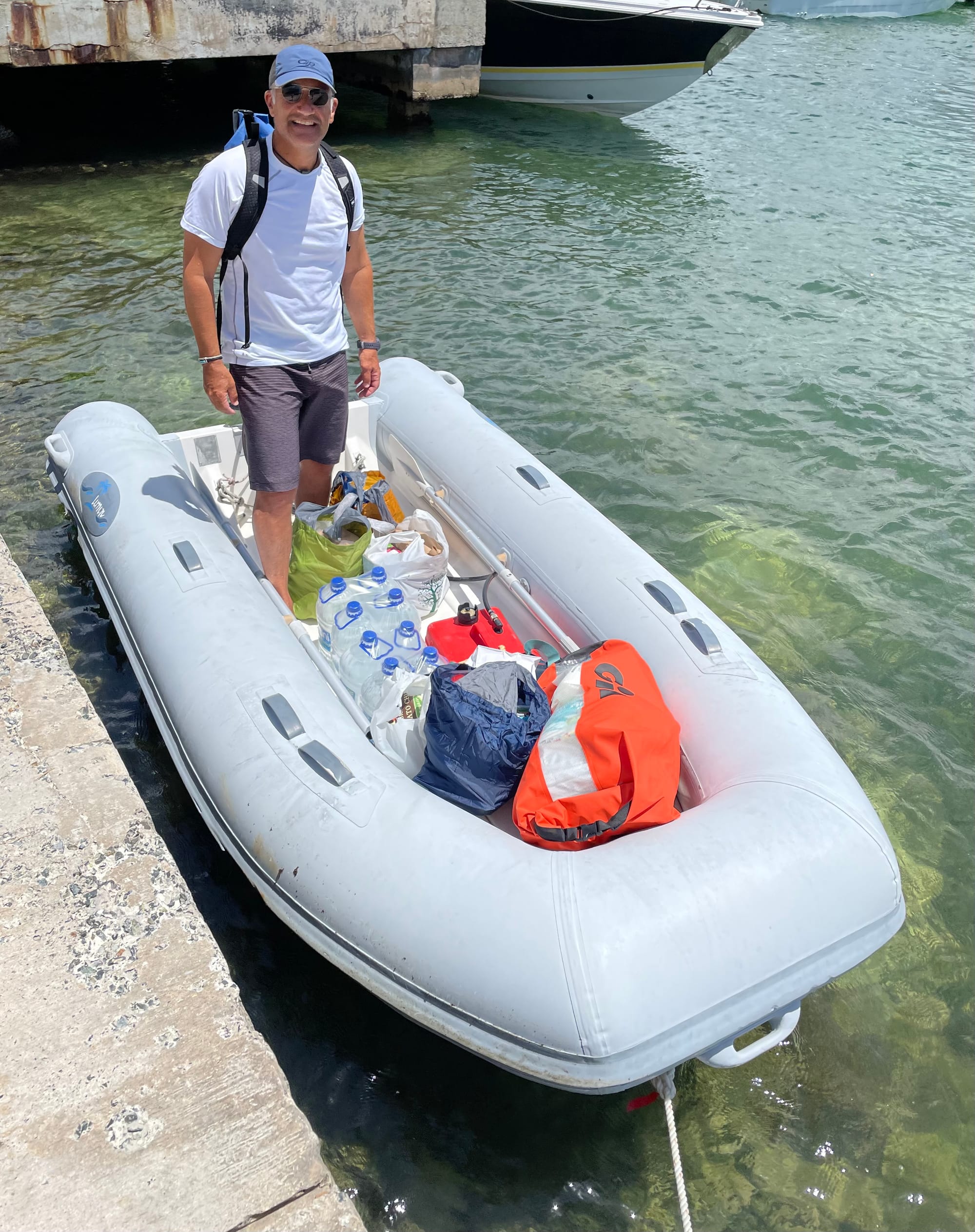
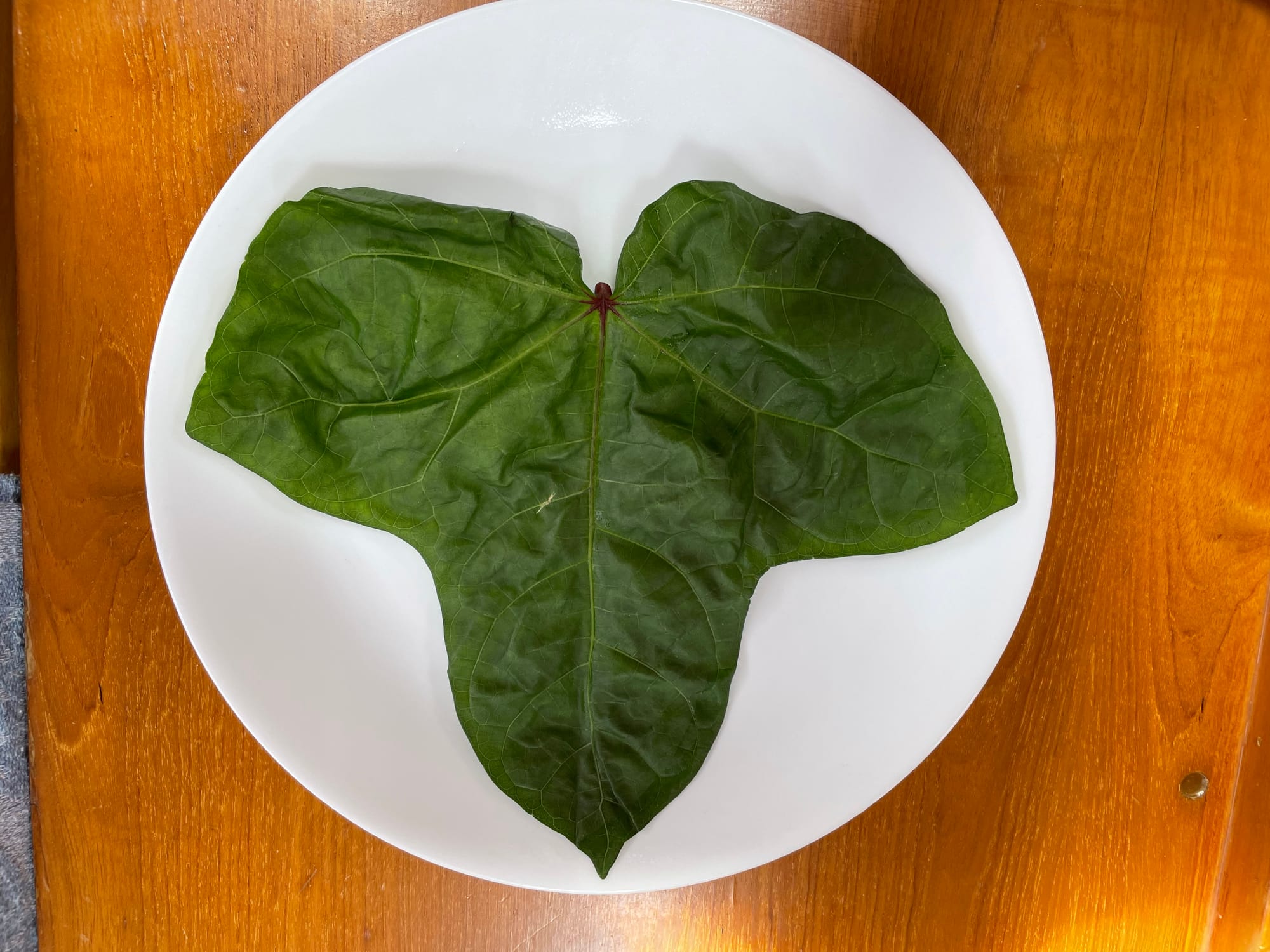
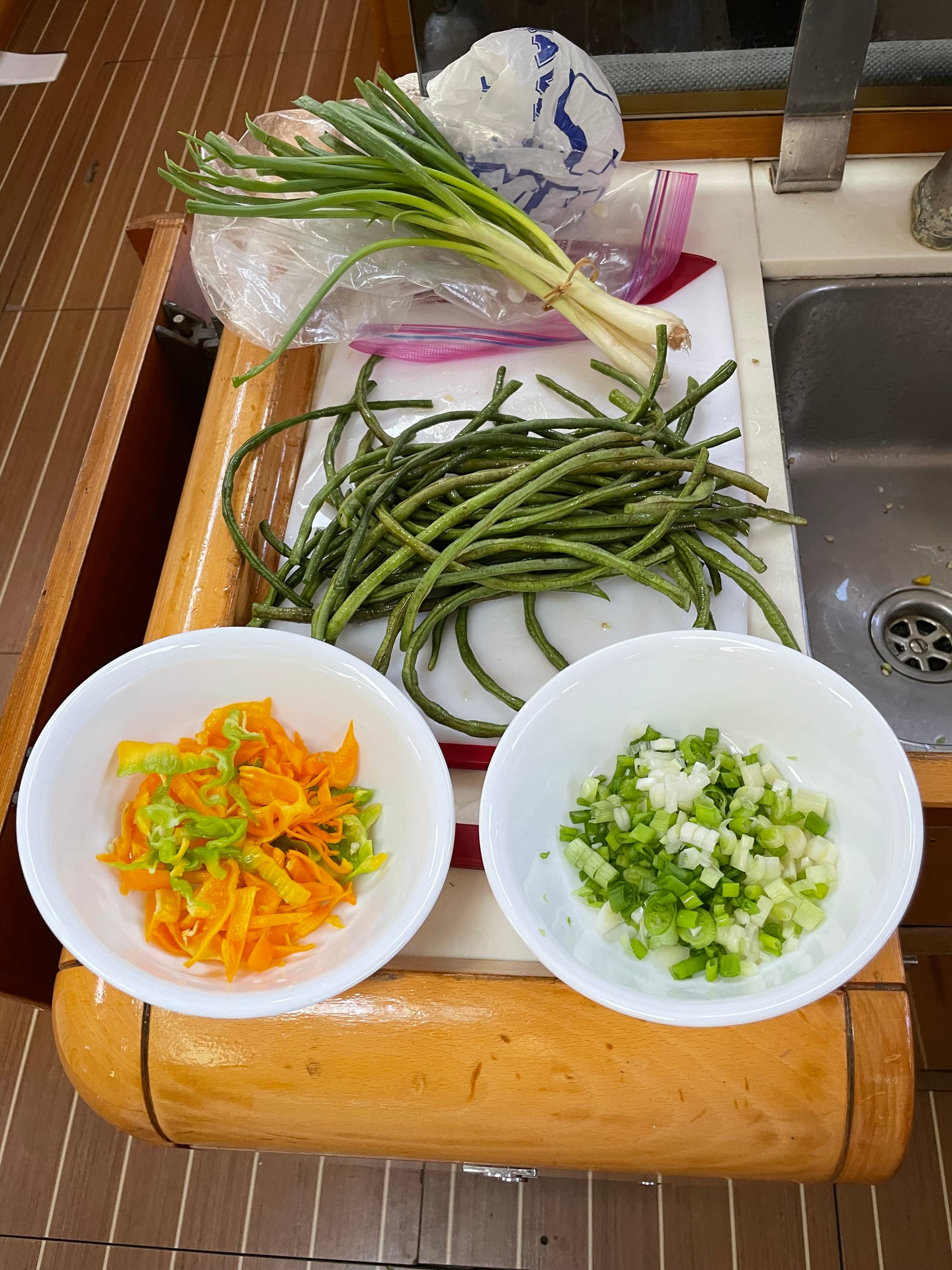
Hurricane Warning Notice / Provisioning in the Dinghy / BVI Edible Green / Farmers Market Produce
The chart plotter screen at the helm was fried, but luckily we had our iPad loaded with navigation software for raster charts as a back up.
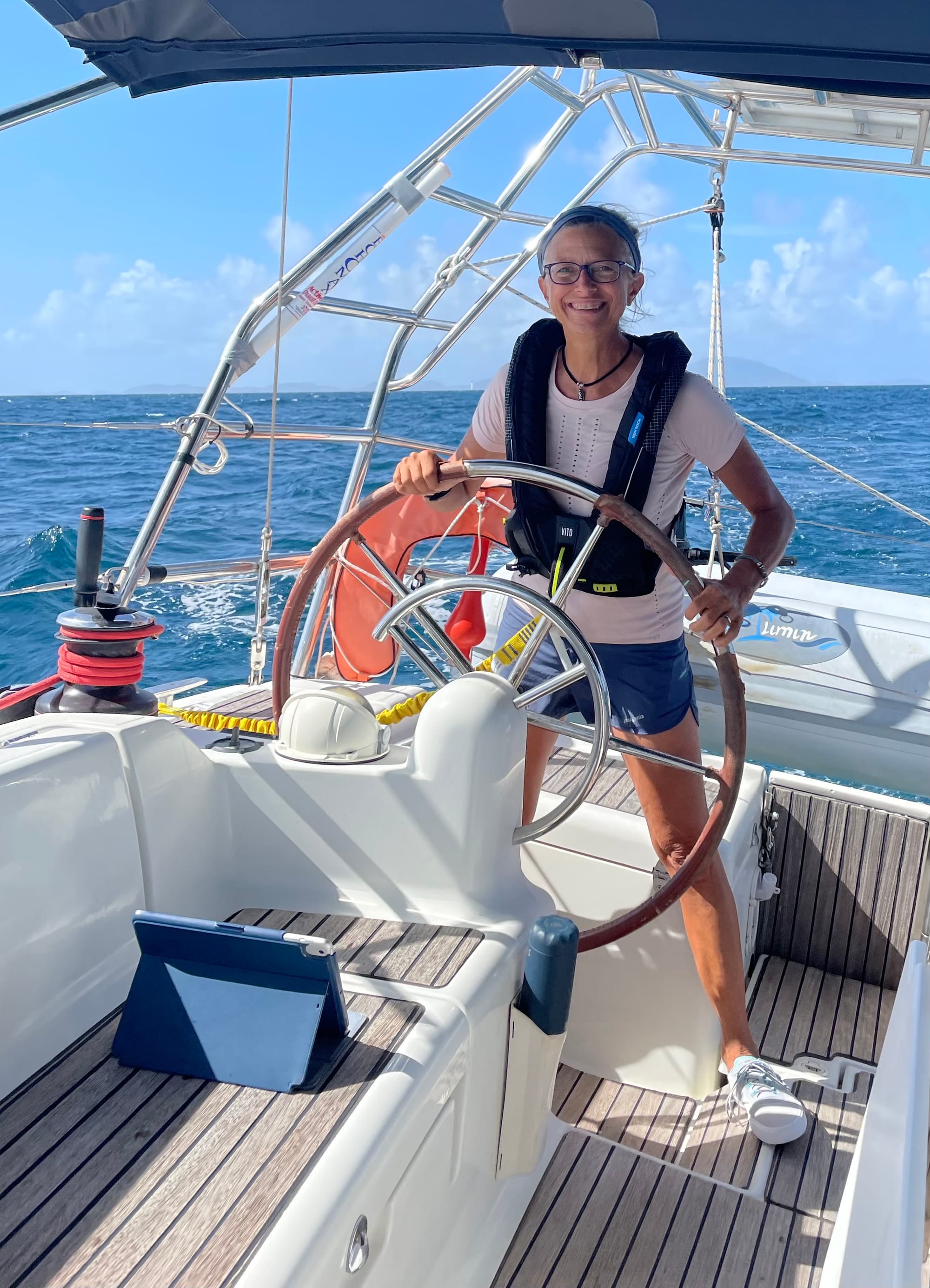
We had a couple of winch overrides which we sorted out during a squall. The second reef line on the mainsail parted - it was an old frayed rope and couldn’t the take the load - so we jury rigged a new one. The steering had a lot of play which we never resolved, the solenoid for the propane stopped working, the anemometer disappeared mysteriously, and the dinghy outboard had a propulsion issue - just a few problems. Oh, and during some high winds at anchor we noticed that the stainless steel bow roller was pulling away from the fiberglass.
In almost all cases, needed parts weren’t available (COVID-19 again) so we came up with work arounds for whatever went wrong with help from Richard. Looking back now, much of this seems somewhat ordinary - even when things are maintained stuff breaks, parts aren’t available, the outboard is on the fritz again.
This ability to workaround a challenge with a creative solution is a valuable lesson for long term cruising in remote places. Things never go as planned, every problem has more than one solution.
Sailing, after all, is doing boat repairs in exotic places, if you’re lucky.
Member discussion